 sales@vg-med.com
 Idioma




¿qué estás buscando?
?
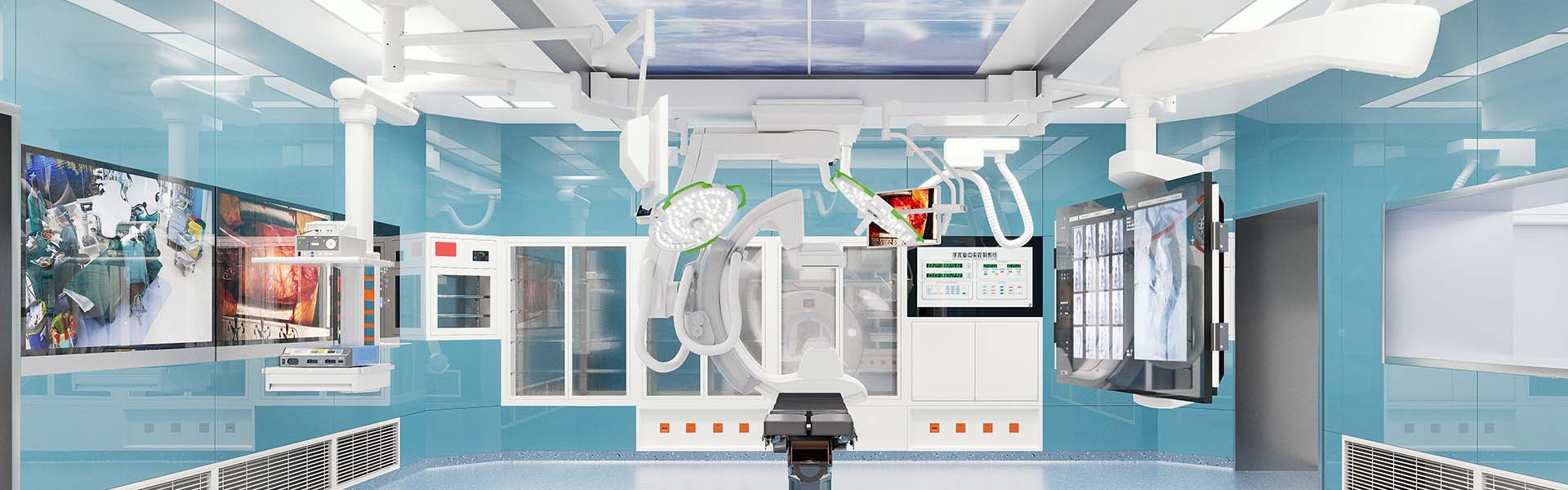
A modular surgical table is one of the most cost-effective equipment decisions an operating room can make. Instead of buying a dedicated table for every specialty, a single modular system adapts to general surgery, orthopedics, spine, urology, and beyond — simply by swapping table top modules.
But "modular" means different things to different manufacturers. Some sell a base column with a handful of interchangeable sections; others offer a full ecosystem of specialty modules, imaging-compatible carbon fiber tops, and quick-release couplings. This guide explains how a modular surgical table actually works, what benefits it delivers over fixed tables, and the exact checklist to use before you buy.
A modular surgical table is an operating table constructed from interchangeable components: a powered column and base, plus detachable table top sections (head, back, seat, and leg sections) and specialty modules that connect through a standardized coupling system.
The defining principle: one platform, many configurations. The same electro-hydraulic column that carries a standard general-surgery top today can accept an orthopedic traction module tomorrow, a radiolucent carbon fiber spine top next quarter, or a split-leg section for urology and gynecology — without replacing the entire table.
This is why modular systems are often described as "surgical table systems" rather than single tables: the value lies not in any one configuration, but in the range of configurations a hospital can build from the same core platform.
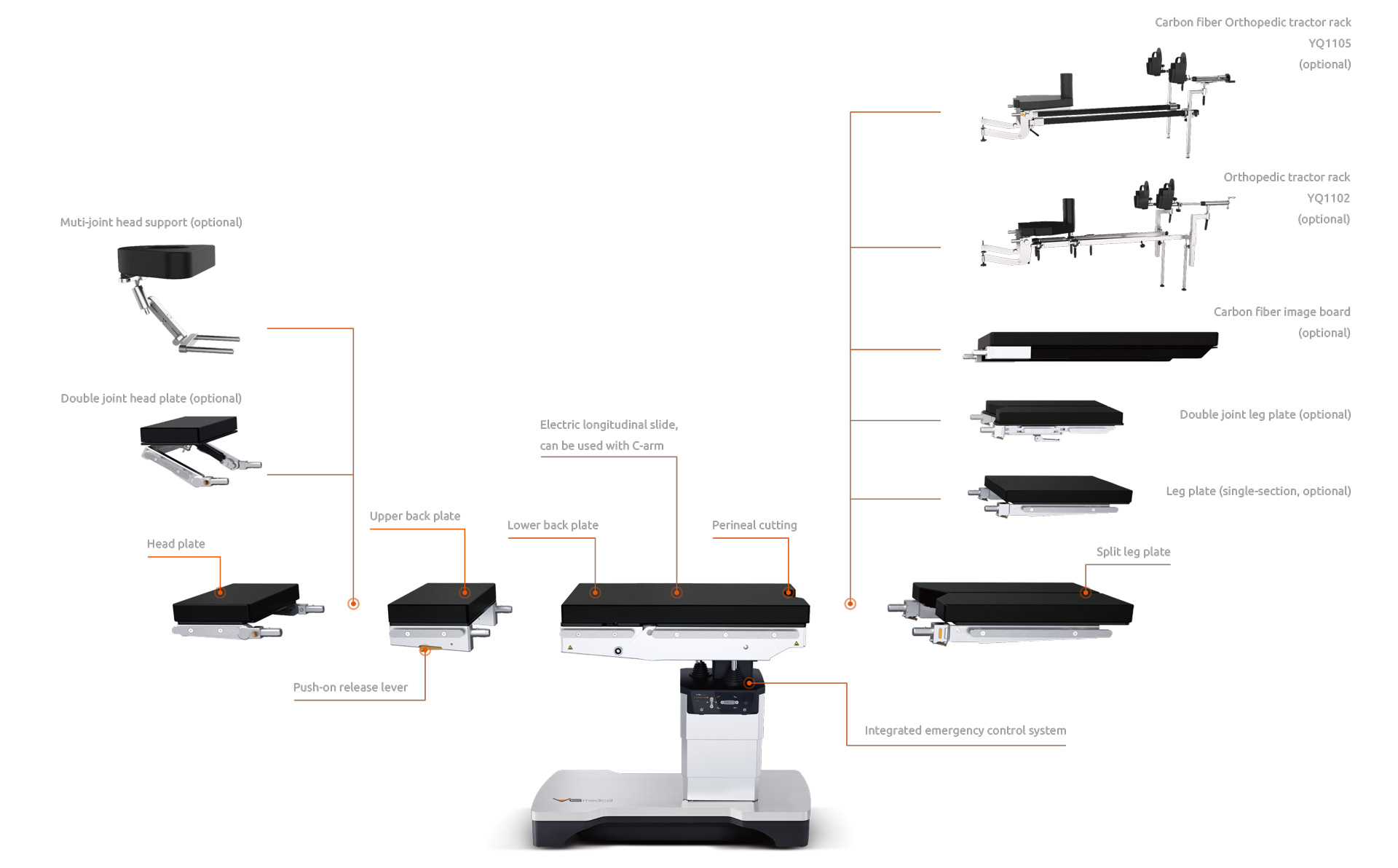
Understanding the building blocks helps you compare systems on equal footing.
The structural core. In modern systems, an electro-hydraulic column handles height adjustment, Trendelenburg / reverse Trendelenburg, and lateral tilt, while a low-profile or T-shaped base keeps the footprint small and C-arm access open. Battery backup keeps the table operational during power interruptions.
The patient-supporting surfaces, typically divided into four or five sections. On a modular surgical table, these sections detach individually — so a damaged leg section is replaced in minutes, not days, and the OR keeps running.
This is where modular design earns its keep. Common modules include:
· Orthopedic traction modules with femoral and lower-limb traction brackets for fracture reduction and nailing
· Radiolucent carbon fiber top modules for uninterrupted C-arm imaging over the full body length
· Kidney bridges / back sections for exaggerated flexion in renal and bariatric procedures
· Split-leg and perineal cut-out sections for lithotomy positioning in urology, gynecology, and colorectal surgery
· Extension decks and head positioning modules for spine and neuro procedures
Side rails, rail clamps, arm supports, strap sets, and positioners. Check that the accessory ecosystem uses a standard rail interface — proprietary rails lock you into one vendor's accessories for the life of the table.
A modular surgical table system covers general, ortho, spine, vascular, urology, and gynecologic surgery from a single column. For multi-disciplinary hospitals, that eliminates the need to buy and store three to five dedicated tables.
Adding a new specialty typically means buying one module, not a whole new table. Over a 10–15 year lifecycle, module-based expansion is dramatically cheaper than table-based expansion — and the existing column keeps its full resale and reuse value.
Quick-release couplings let staff reconfigure a table between cases in minutes. When consecutive cases span different specialties (a hip nailing after a lap chole), the room doesn't go idle waiting for a different table to be wheeled in, cleaned, and re-draped. Faster turnover directly increases daily case volume.
Detachable sections and smooth, gap-free module surfaces can be removed for thorough cleaning and disinfection between procedures — a meaningful advantage in sterile processing and audit compliance.
A well-designed modular system decouples the powered column from the tops. As surgical practice evolves, you upgrade modules while keeping the base — protecting the original investment.
Storage space in most OR suites is scarce. One modular system plus a module rack replaces a fleet of specialty tables, freeing space for other equipment.
|
Factor |
Modular surgical table |
Fixed (dedicated) surgical table |
|
Specialty coverage |
One system, all major specialties |
One specialty per table |
|
Changeover between cases |
Minutes — swap modules |
Requires a second table |
|
Lifecycle cost |
Buy modules as needs grow |
Buy entire tables as needs grow |
|
Upgradability |
New tops work on existing columns |
New requirement = new table |
|
Storage footprint |
Column + module rack |
Multiple full tables |
|
Upfront cost |
Higher per system |
Lower per table |
|
Best for |
Multi-specialty hospitals, growing ORs |
Single-specialty rooms (e.g., a dedicated ortho suite) |
Fixed tables still have a place — a hospital running one high-volume specialty may prefer a purpose-built table. But for mixed surgical caseloads, modular wins on every financial metric that matters over time.
1. Safe working load. Confirm both patient weight capacity and, critically, mechanical load with accessories (traction forces, arm boards, robotic docking). Look for at least 135 kg patient load as a baseline; bariatric programs need 250 kg+.
2. Module range. Ask for the full module catalog — not just what's bundled. The system you buy is the system you'll live with for a decade.
3. Coupling mechanism. Quick-release, tool-free module changes are the difference between a 3-minute and a 20-minute turnover.
4. Imaging compatibility. For ortho and spine, demand radiolucent carbon fiber modules with full-length C-arm clearance and a low base profile.
5. Positioning envelope. Lateral tilt (±15° or more), Trendelenburg ranges, and table slide for fluoroscopy access.
6. Power and reliability. Electro-hydraulic drive, battery backup, and manual override controls for emergencies.
7. Certifications and support. MDR CE marking and ISO 13485 manufacturing are baseline for international procurement; also confirm spare parts and module lead times — a modular system is only as good as its supply chain.
· Orthopedics & trauma: traction modules with femoral/lower-limb brackets; carbon fiber tops for intraoperative fluoroscopy
· Spine surgery: full-length radiolucent top, arch positioning for prone cases
· General & laparoscopic surgery: standard four-section top with precise Trendelenburg for pneumoperitoneum positioning
· Urology & gynecology: split-leg sections and perineal access for lithotomy
· Bariatric surgery: high-capacity column with wide, reinforced top modules
VG Medical builds modular, electro-hydraulic surgical table systems — including the VCARE series — designed around exactly this philosophy: one powered platform, a full catalog of interchangeable modules, and tool-free coupling for fast turnover.
Every VG system ships with MDR CE marking and is manufactured under ISO 13485. With 20+ years of operating-table engineering, 85 patents, and installations serving over 1,500 hospitals across 40+ countries, VG Medical's modular tables are engineered for hospitals that need multi-specialty flexibility without buying a table for every discipline.
Explore our full surgical table range, or contact our team to configure a modular system for your case mix.
What is a modular surgical table?
A modular surgical table is an operating table built from a powered column plus interchangeable table top sections and specialty modules (traction, radiolucent carbon fiber, split-leg). One platform adapts to multiple surgical specialties by swapping modules.
How is a modular surgical table different from a fixed operating table?
A fixed table has a permanently attached top designed for one use case. A modular system accepts interchangeable tops and modules, so the same column serves general, ortho, spine, and other specialties — lowering lifecycle cost and speeding room turnover.
What specialties can a modular surgical table support?
General surgery, orthopedics and trauma, spine, urology, gynecology, vascular, and bariatric surgery — limited mainly by the module catalog offered by the manufacturer.
Are modular surgical tables compatible with C-arms?
Yes, when configured with radiolucent carbon fiber top modules and a low-profile base. These provide uninterrupted imaging clearance along the full patient length.
How much weight can a modular surgical table hold?
Typical safe working loads range from 135 kg to 250 kg+, depending on the column. Always verify both patient capacity and mechanical load with accessories attached.
Is a modular surgical table more expensive than a fixed one?
Upfront, usually yes — the powered column and coupling system cost more. Over its lifecycle, typically no: adding specialties means buying modules, not entire tables.
dejar un mensaje